Tom Martin, Lisa McNair named interim co-executive directors of Institute for Creativity, Arts, and Technology
In their joint role, Martin and McNair will continue to shape the institute’s strategic vision by leveraging cutting-edge technology and a collaborative network of scholars.
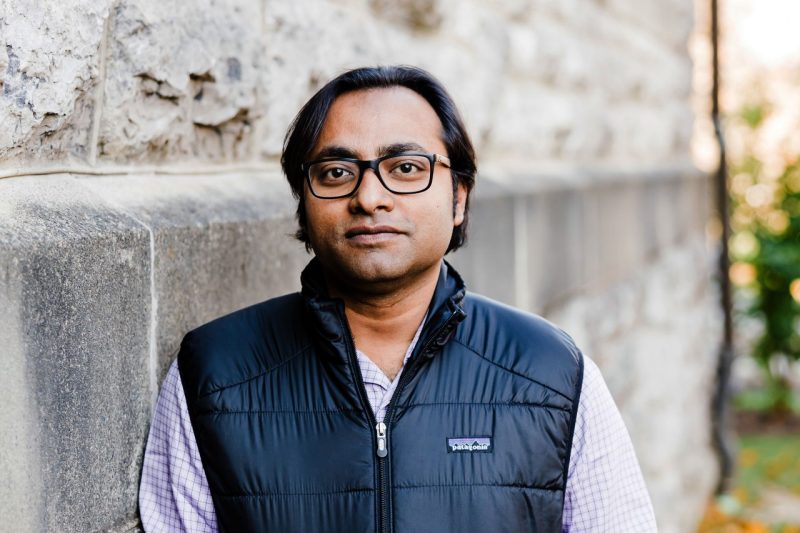
Tom Martin (left) and Lisa McNair

Tom Martin and Lisa McNair will assume the role of interim co-executive directors of the Institute for Creativity, Arts, and Technology (ICAT) on Aug. 10.
Currently deputy executive directors of the institute, Martin and McNair will take on the position together as Ben Knapp, who has served as executive director for 14 years, retires from Virginia Tech. Knapp has been named dean of the College of Arts, Media and Design at Northeastern University.
“Tom and Lisa have demonstrated extraordinary leadership during their time at Virginia Tech and bring decades of experience with research, teaching, and interdisciplinary work at the interaction of arts and technology,” said Dan Sui, senior vice president for research and innovation. “Their visionary, forward thinking is essential for advancing ICAT’s mission and will strengthen the institute's portfolio and the university’s research enterprise.”
In their joint role, Martin and McNair will continue to shape the institute’s strategic vision by leveraging cutting-edge technology and a collaborative network of scholars. Their work will connect faculty and students across disciplines to address societal issues and industry challenges while pushing the boundaries of artistic expression with external partners. They will report to the senior vice president of Research and Innovation.
Martin and McNair’s backgrounds in technology, design, health, computing, engineering education, linguistics, and the arts reflect the interdisciplinary nature and true essence of the institute. For nearly 20 years they have collaborated on a number of research projects, including the National Science Foundation’s (NSF) Revolutionizing Engineering Departments project.
A member of the Virginia Tech community since 2001, Martin is also a professor in the Bradley Department of Electrical and Computer Engineering with courtesy appointments in the School of Architecture, the School of Design, and the Departments of Engineering Education and Computer Science. Currently, Martin is wrapping up a temporary assignment as a program director for the NSF’s Smart Health and Human-Centered Computing programs.
With Knapp, Martin was part of the organizing team for the ACCelerate Creativity and Innovation Festivals, which was led by ICAT in collaboration with the Smithsonian National Museum of American History for three festivals. As a principal or co-principal investigator, Martin has received over $7.4 million in external funding, led the creation of Virginia Tech’s Center for Future Work Places and Practices, and received the NSF’s Presidential Early Career Award for Scientists and Engineers award for electronic textiles research.
For over two decades, Martin also has led the international wearable computing research community with the goal of creating wearable technologies that fit seamlessly into people's daily routines. He received his Ph.D. from Carnegie Mellon University and his bachelor’s degree from the University of Cincinnati.
During her time at Virginia Tech, McNair has also been instrumental in fostering innovative research collaborations that bridge technology, arts, and humanities. As a professor in engineering education, she supports early and advanced-stage faculty and students in strengthening their careers through creative, interdisciplinary projects. She recently led a team of arts-driven researchers in exploring the ways humans connect when creating art, resulting in the "Carving out Creativity" exhibitions in Alexandria, Roanoke, and Blacksburg.
Other notable projects led by McNair include developing hands-on additive manufacturing modules to create a cohesive foundation for undergraduate engineering curricula, interdisciplinary project-based coursework for undergraduates, research on the arts and entrepreneurship, and community-focused infrastructure projects in Alaska. Her work has garnered prestigious accolades, including the NSF Faculty Early Career Development (CAREER) award and Virginia Tech’s Alumni and Dean’s Awards for Outreach Excellence.
McNair previously served as the director of the Center for Educational Networks and Impacts, a center within ICAT; associate department head for graduate programs in engineering education; and chair of engineering education’s promotion and tenure committee. She received her Ph.D. in linguistics from the University of Chicago, and bachelor's and master's degree in English from the University of Georgia.
Both Martin and McNair have worked alongside Knapp during his tenure at Virginia Tech on numerous projects including the National Endowment for the Arts research lab, exploring the role of sentiment in innovation.
Knapp joined the Virginia Tech community as ICAT’s founding director. Since then, he has led or is currently leading numerous efforts that propelled Virginia Tech onto a national and international stage:
- Hosted the Summit on Creativity, Empathy, and Artificial Intelligence at the National Academy of Sciences in Washington, D.C.
- Hosted three ACCelerate festivals
- Led National ArtX program in partnership with International Affairs
- Developed the first-of its-kind piece "Liminal Spaces" with Eric Lyon, a music technologist and composer
- Developed Amazon employee workshops in partnership with the Torpedo Factory in Alexandria and Amazon
- Produced Cubefests
- Co-founded A2RU
- Hosted New Music and Technology Festivals
- Aided in the creation and support of the Creativity and Innovation District at Virginia Tech
- Supported almost 300 arts and design projects
- With university partners, hosted numerous Science Festivals and ICAT Day
“Ben has been a tremendous pioneer of research at the intersection of technology and human creativity at Virginia Tech,” said Sui, also the university’s chief research and innovation officer. “He has become well known for his interdisciplinary collaborations across higher education, nonprofit, and industry. We appreciate the enthusiasm, knowledge, creativity, and dedication that he brought to the institute, which strengthened Virginia Tech’s reputation in this space.”