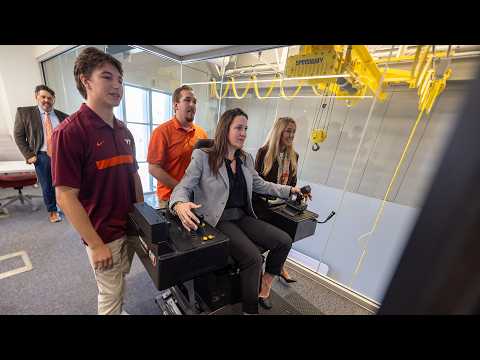
Fall Forestry and Wildlife Field Tours mark 50 years of sustainable forestry education
This is the 50th anniversary of the fall forestry and wildlife field tours. It's the longest running program of its type in Virginia. We have 3 or 4 every year, and we take family woodland owners out to look at sustainable forestry and wildlife management practices on private lands, industry owned lands and publicly owned lands. Forestry is the third largest industry in the state, it brings in over $23 billion a year to the economy. Here in the eastern United States, most of our forests are owned by families, private families and individuals. They own about 10 million acres of our forest land in Virginia. We want them to have the information that they need to keep their forest healthy and keep their forest productive, because that benefits everybody in Virginia. The Forestry and Wildlife Field Tour program is really a true traditional extension program. Extension and the land grant universities do research. We provide educational content and publications. But the field tour program gives us the opportunity to take the research to the people. And we can take landowners out on properties where we can show them management that is put into place on the ground. And then it also provides the opportunity for a variety of resource professionals, whether it's wildlife biologists and a variety of forestry professionals, to interact directly with landowners on the ground, on property where they have been doing active management. Some of the subjects that we talk about on these tours have been the same for 50 years with what is good for us management, good wildlife management. How do these things fit together? Others are different. Markets are different. Markets are more challenging. It was good to talk CLT or mass timber today as bright spot and potential new markets for woodland owners. As our science evolves in forestry and wildlife management, how we do things on the ground changes, and also our forests have been changing a lot. So we have the introduction of invasive species, both plants and insects and diseases. And so we need to figure out how to manage for them and share that information with the public. Our challenges with forest health are ongoing and continual. And so there's always new science coming out about how best to deal with those challenges. Not only with the program being 50 years old, but in this time in our society and culture with artificial intelligence. And what the future holds is such a wild card. We know it's going to be very different, but we also know the wood and forests are going to be part of it.
Related Content
-
Video Item
-
Video Item
 Virginia Peanuts: Growing the Best from the Ground Up , video Date: Oct 20, 2026
-
Video Item
 Can we save an imperiled pollinator? , video Date: Oct 09, 2026
-
Video Item
 From hens to Hokies , video Date: Oct 07, 2026