Academic freedom: The freedom to teach, discover, and serve
Faculty members examine academic freedom’s protections, responsibilities, and impact on teaching, research, and service ahead of an Oct. 21 panel co-hosted by Faculty Senate and partners.
Burruss Hall. Photo by Emily Alberts for Virginia Tech.

“Academic freedom is oft touted but little understood,” said Jerald Walz, a collegiate assistant professor in the Department of Agricultural, Leadership, and Community Education.
As universities navigate questions about free inquiry, institutional autonomy and scholarly expression, Virginia Tech faculty are examining what academic freedom protects, what responsibilities accompany it, and why it matters.
According to the Academic Freedom Index, 50 of the 179 countries and territories reviewed experienced significant declines in academic freedom over the past decade, with losses of institutional autonomy leaving scholars increasingly vulnerable to external pressures.
At Virginia Tech, this freedom underpins the university's mission of teaching, research, and outreach.
“It is intended to allow scholars to pursue the truth, regardless of how controversial it may be,” said Ron Fricker, vice provost for faculty affairs.
But it also carries responsibilities. Faculty occupy multiple roles — scholar, teacher, university employee, and private citizen — with different protections and professional obligations. Expertise also has boundaries.
Fricker points to his experience during the COVID-19 pandemic. As a statistician, he could speak authoritatively about data and statistics, but that expertise did not make him an authority on aerosol transmission.
“I can only use my credentials when I'm speaking to my expertise,” Fricker said.
Academic freedom also means defending intellectual expression even when it challenges one's own convictions.
“If you’ve internalized the norms of academic freedom, you defend your adversary’s right to speak,” said Aaron Ansell, a professor of government and international affairs. “That’s crucial.”
A freedom with a purpose
The modern framework for academic freedom emerged during the 20th century. The American Association of University Professors' influential 1940 Statement of Principles on Academic Freedom and Tenure affirmed the importance of academic freedom in teaching and research while emphasizing the responsibilities that accompany it.
In 1967, the Supreme Court described academic freedom as a “special concern of the First Amendment,” recognizing its constitutional significance at public universities.
For Virginia Tech, that distinction matters. As a public land-grant university, it operates within a framework that provides additional protections for speech and expression.
“The goal of academic inquiry is to establish consensus around the truth,” said James Hawdon, director of the Center for Peace Studies and Violence Prevention and vice president of the Faculty Senate. “Academic freedom protects the process needed to achieve that.”
The freedom to teach — and learn
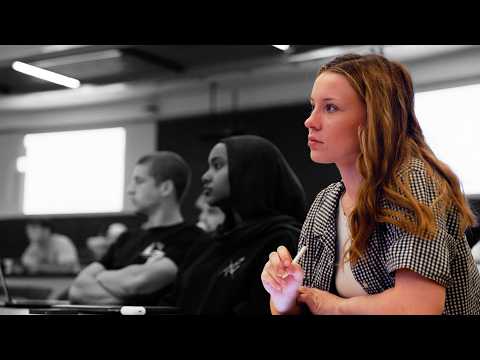
In the classroom, academic freedom allows faculty to teach according to disciplinary standards without outside pressure dictating acceptable conclusions. It also creates space for students to question ideas and develop independent judgments.
Kristen Benson, associate professor of human development and family science, puts that principle into practice when students examine controversial legislation.
“The grade is not about the topic of the law they chose to examine or their stance on the issue,” Benson said. “It’s about how they ground their argument.”
Benson also emphasizes the importance of language in navigating difficult conversations. Words carry histories and connotations that can shape how ideas are received.
“We want to invite understanding, not deepen division.”
Engaging with opposing viewpoints is equally essential to intellectual inquiry, even when those perspectives challenge deeply held beliefs.
“Academic freedom does not promise agreement; on the contrary, it facilitates robust discussion and debate that is essential for genuine education and inquiry,” said Justin Lemkul, associate professor of biochemistry and president of the Faculty Senate.
The freedom to discover
A university does more than transmit established knowledge. It also questions what is known and generates new discoveries.
“In the absence of that, a university is little more than a place where we simply teach from textbooks — that’s a high school,” Fricker said. “Our purpose is broader than that.”
That pursuit requires intellectual latitude, but not freedom from scrutiny. Research proposals undergo review, findings face peer evaluation, and conclusions must withstand challenges from other scholars.
The freedom to serve
For a land-grant university, knowledge must reach beyond campus. Academic freedom helps ensure that research and expertise can serve communities, even when findings challenge established practices or powerful interests.
“We want to provide the best knowledge and understanding that we possibly can to the people outside of academia putting our discoveries to work,” Walz said.
University Distinguished Professor Marc Edwards, a MacArthur Fellow, helped expose dangerous lead contamination in Flint, Michigan, challenging government assurances that the water was safe and pressing officials to act.
During the COVID-19 pandemic, University Distinguished Professor and MacArthur Fellow Linsey Marr drew on years of research into airborne virus transmission to question prevailing beliefs about how the coronavirus spread. Her findings helped inform public health measures, including improved ventilation and air filtration.
Both examples illustrate how intellectual independence can translate into tangible public benefits.
“Faculty have to have the intellectual freedom to think outside the box — way outside the box,” Fricker said. “Inside the box is what we already know, or think we know. We want scholars to go beyond it, to chase ideas that might seem improbable or even impossible, and to discover things we’ve never seen before. The whole point is to make the box bigger. And you can’t do that if you never leave it.”
Continuing the conversation
Faculty and staff can explore these questions further during the Panel with the Provosts: Free Inquiry and Academic Freedom on Wednesday, Oct. 21, at 3 p.m at The Inn at Virginia Tech and via Zoom. Executive Vice President and Provost Julie Ross and former provost Cyril Clarke, now special advisor to the president, will lead the discussion. Reception to follow.