New Equine Field Services instructor brings racetrack roots and whole-horse approach to veterinary college

Sarah Varnell’s interest in equine medicine got a fast start out of the starting gate as a teenager.
Varnell shadowed a racetrack veterinarian on school breaks, and what followed most days was 13 hours on her feet, moving from stall to stall behind a woman who seemed to know exactly what each horse needed before it made a sound.
"I loved every second of it," Varnell said. "And I was like, maybe this is something I should do."
She did. Nearly two decades later, Varnell has joined the Virginia-Maryland College of Veterinary Medicine as the new Equine Field Services clinical instructor in the Department of Large Animal Clinical Sciences, arriving after nine years of private equine practice and a career built on the idea that keeping a horse sound is better than fixing one that isn't.
A Wider Toolkit for Equine Athletes
Varnell's clinical focus sits at the intersection of sports medicine, integrative care, and prevention — treating horses less as patients to be repaired than as athletes to be maintained.
"Watching the horses be athletes and performing, and getting them to that level, is super exciting," she said. "I think it's really cool when we can have horses and support them to be the athletes that a lot of times they've been bred to be, even if it is horse's whose job is to babysit the grandkids. "
She holds certifications in acupuncture through CureCore, earned in 2023, and veterinary spinal manipulation therapy, the clinical term for chiropractic care, through Healing Oasis in 2024. Both programs required travel for in-person labs and testing, completed on top of a full-time practice schedule.
Her certified versatility allows patients and clients more options. A horse with back pain might benefit from medication, but it might also benefit from chiropractic adjustment or acupuncture.
"It gives me the opportunity to combine it with our normal treatments and give more treatment options," Varnell said, "and not just be limited."
That same logic drives her interest in preventive care — vaccinations, dental exams, and ultrasound screening aimed at catching small problems before they become acute emergencies.
“I'd rather prevent injuries from happening and support them," she said, "and then treat them after the fact."
From Barn Aisle to Vet School
Varnell grew up in Delaware, the daughter of two polymer scientists.
"I really liked science in high school," she said, "and I really liked animals as well."
She earned her undergraduate degree at Malone University in Ohio before heading to the University of California, Davis for veterinary school.
A one-year internship at Manor Equine, just north of Baltimore, followed graduation in 2017 — a mixed surgical and sports medicine practice heavy on arthroscopies and the standardbreds and thoroughbreds that filled the region's training barns.
Private practice came next: several years in Ohio, then a move back toward family in Delaware during the pandemic. But something was missing. At her previous practice, Varnell had worked alongside veterinary students and interns. She found she missed having them around.
A locum stint at Purdue University settled the question. "I really liked it," she said, "and then decided when this popped up that I wanted to try and transition to academia."
The shift has meant a different rhythm.
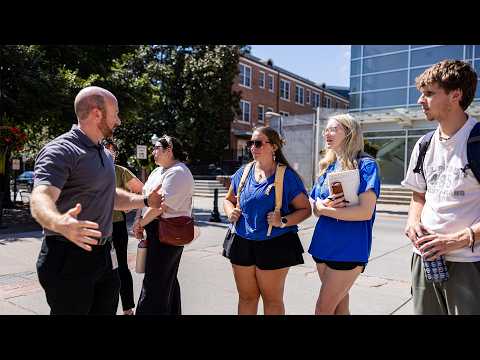
“I think in academia, it's definitely much more focused on teaching, so it is a little bit of a slower pace than private practice,” Varnell said. “Private practice definitely would fit in a lot more cases throughout the day. This is nice to sort of take a step back and teach and explain what I'm doing to students when I have them around.
That slower pace extends to clients, too — something she didn't expect to enjoy as much as she does. "It's kind of nice because the owners hear a lot of the education and explanation too," Varnell said. "So they're learning as well."
Research Rooted in Real Cases
As the field veterinarian during an outbreak of equine herpesvirus at a 30-horse barn, Varnell swabbed and monitored the animals weekly for five weeks alongside colleagues and a former professor, work that contributed to two published papers after the virus was identified as a previously undocumented genotype. Every horse in the barn recovered.
During her internship, she also tracked a pattern that intrigued her: Among standardbred foals, cases of osteochondritis dissecans — a developmental defect in joint cartilage — seemed to cluster not just by mare, but by the specific location of the lesion within the joint. She never ran the statistics, but the correlation stuck with her as a question worth answering.
It's the kind of case-based research she'd like to pursue more formally now that she's in academia, alongside teaching the next generation of equine practitioners the same blend of traditional and integrative medicine she's spent her career refining.
At home, Varnell gardens, bakes, and keeps company with a three-legged cat rescued as an abandoned barn kitten — one more reminder, she said, of how often the job follows her home.