College of Engineering's Major Grants Initiative funds interdisciplinary research
Spanning infrastructure, environmental sensing, critical minerals, construction robotics, extended reality, advanced air mobility, wireless power and data, and human and veterinary medicine, the 10 projects include both emerging collaborations and established teams.

The Virginia Tech College of Engineering has selected 10 interdisciplinary research teams for the 2026 Major Grants Initiative, investing in collaborations designed to position faculty for large-scale, center- and institute-level research funding.
Launched in 2025, the Major Grants Initiative (MGI) provides strategic resources to help faculty build interdisciplinary teams, develop new research directions, strengthen partnerships, and prepare competitive proposals for major external funding opportunities.
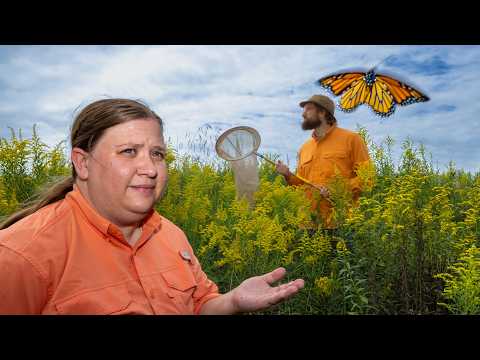
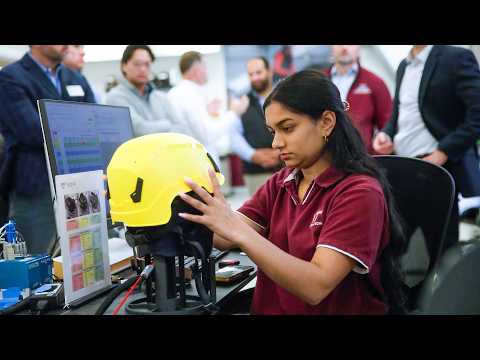
“Major research challenges increasingly require expertise that crosses traditional disciplinary boundaries,” said Harpreet Dhillon, W. Martin Johnson Professor of Engineering and associate dean for research and innovation. “The Major Grants Initiative gives our faculty the resources and structure to bring those capabilities together around ambitious ideas. Whether we are helping a new team establish its research vision or an experienced team prepare for a center-scale opportunity, our goal is to build collaborations that can compete at the highest level and create lasting impact.”
This year’s Research Investment Program includes seven projects in the Team Formation track and three in the Strategic Expansion track. Together, the 10 projects bring together 76 faculty representing at least 22 academic departments and schools across Virginia Tech, with research spanning infrastructure, environmental sensing, critical minerals, construction robotics, extended reality, advanced air mobility, wireless power and data, and human and veterinary medicine.
Team Formation Awards
The Team Formation track supports new and emerging interdisciplinary collaborations around areas in which Virginia Tech has strong expertise and the potential to develop competitive large-scale research programs. Selected teams may receive up to $50,000 to establish collaborations, generate preliminary work, engage partners, and develop a research agenda for future external funding.
Automated and industrialized design and construction of our nation’s infrastructure
- Matthew Eatherton, Montague-Betts Professor of Structural Steel Design, civil and environmental engineering
- Adam Phillips, associate professor, civil and environmental engineering
- Tripp Shealy, associate professor and Bowman Faculty Fellow in Sustainable Land Development, civil and environmental engineering
- Alexander Brand, associate professor, civil and environmental engineering
- Rodrigo Sarlo, associate professor, civil and environmental engineering
- Andrew McCoy, Beliveau Professor of Building Construction, Myers-Lawson School of Construction
- Zhenyu “James” Kong, Ralph H. Bogle Professor, industrial and systems engineering
Chemo-mechano-biological control of microbe–material interfaces
- Bahareh Behkam, professor, mechanical engineering
- Sanket Deshmukh, associate professor and Erin Michelle Lohr Faculty Fellow, chemical engineering
Forging expertise in modern technology and engineering through a convergence of Hokies
- Raffaella De Vita, professor, associate department head of research, and Kevin P. Granata Faculty Fellow, mechanical engineering
Next-generation sensing of environmental contaminants
- Gabriel Isaacman-VanWertz, professor and Anthony and Catherine Moraco Endowed Faculty Fellow, civil and environmental engineering
Intelligent and interactive construction robots
- Dylan Losey, associate professor and John R. Jones III Faculty Fellow, mechanical engineering
- Hongrui Yu, assistant professor, civil and environmental engineering
- Abiola Akanmu, associate professor of construction engineering and management, Myers-Lawson School of Construction
Interfacial molecular assembly to enhance critical mineral separation
- Wencai Zhang, associate professor, mining and minerals engineering
SonicNet: Acoustic energy networks for wireless power and data
- Shima Shahab, associate professor and Mary V. Jones Junior Faculty Fellow, mechanical engineering
- Pinar Acar, associate professor and John R. Jones III Faculty Fellow, mechanical engineering
Strategic Expansion Awards
The Strategic Expansion track supports established interdisciplinary teams that are positioned to pursue center-scale external funding. Teams may receive up to $200,000 to expand their research programs, strengthen partnerships, develop preliminary work, and advance competitive proposals for major funding opportunities.
Virtual integrated testing and analysis laboratory for AAM certification
- Justin Jaworski, associate professor, aerospace and ocean engineering
- Darshan Sarojini, assistant professor, aerospace and ocean engineering
- Marie Paretti, professor, engineering education
- Taylan Topcu, assistant professor, industrial and systems engineering
Curing with sound: Transforming human and veterinary medicine with a One Health focused ultrasound program
- Eli Vlaisavljevich, professor and Bill and Lavinia Hall Faculty Fellow, biomedical engineering
- Adam Maxwell, research associate professor, biomedical engineering
- Shima Shahab, associate professor and Mary V. Jones Junior Faculty Fellow, mechanical engineering
- John Rossmeisl, Mahin Professor of Neurology and Neurosurgery and associate department head, small animal clinical sciences, Virginia-Maryland College of Veterinary Medicine
Enabling low-friction intelligent XR
- Doug Bowman, Frank J. Maher Professor, computer science
- Joseph Gabbard, Hal G. Prillaman Professor, industrial and systems engineering
The two tracks are designed to create a pathway for research teams at different stages of development. Team Formation projects focus on establishing the interdisciplinary foundation needed for future large-scale efforts, while Strategic Expansion projects accelerate established teams toward highly competitive center- and institute-level proposals. In addition to the Research Investment program, MGI also supports faculty through the Scaling Scholarship program and Equipment Investment program.
The Major Grants Initiative is part of the College of Engineering’s broader effort to strengthen the research ecosystem needed to address complex technological and societal challenges and increase Virginia Tech’s competitiveness for major external research investments.
The college will host its second annual MGI Day on April 8, 2027, to showcase research progress and outcomes from the funded teams. Additional information about upcoming funding opportunities can be found on the Major Grants Initiative website or by contacting Nicole Akers at snakers@vt.edu.
To support engineering research with real societal impact like the Major Grants Initiative projects, consider a gift to the College of Engineering annual fund.