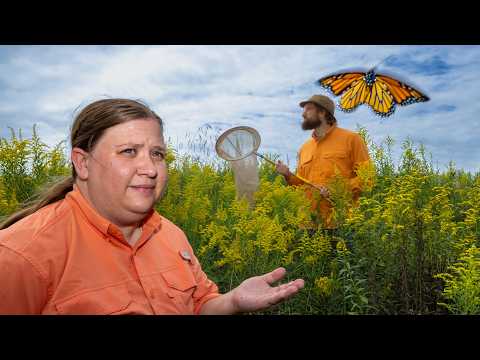
Brittany Hunt on bringing Native stories to the screen

For Brittany Hunt, working with PBS North Carolina was more than just a professional opportunity — it was a chance to elevate Native stories that she said are too often forgotten.
Hunt, assistant professor in the School of Education, is a Lumbee scholar whose research examines the erasure of Native history in the classroom. The Lumbee Tribe of North Carolina is based in the southeastern part of the state. Hunt recently served as a field producer for an episode of PBS North Carolina’s “Homegrown History,” a multiyear public history initiative that investigates lesser-known stories from North Carolina’s past. The episode airs on Sept. 25.
In 2026, the initiative is spotlighting North Carolina’s role in the American Revolution to commemorate the nation’s 250th anniversary. Hunt worked on the fourth episode, “A Freedom-Loving People,” which explores the experiences of Native peoples during the American Revolution and their enduring connections to North Carolina.
Hunt spoke about the project, the importance of Native representation in history and media, and what it means to see her community’s stories reach a broad audience.
How did you help shape the focus of “A Freedom-Loving People”?
A big part of the episode is Indigenous participation in American wars and the complicated relationship between patriotism and Indigenous identity. Indigenous people have served in every American conflict, going all the way back to the American Revolution.
We talked about that strong spirit of protection – protecting the land, regardless of who technically owns it. I shared my own thoughts about being Lumbee and about Lumbee culture, and I helped the producers think through those ideas.
My job was primarily putting them in contact with Lumbee people – like Adrian Kyle Locklear, a restaurant owner and musician who talked about entrepreneurship in the episode, and Alexis Jones, a well-known singer who filmed a segment with her dad on the Lumber River, which is sacred to the Lumbee people.
What stories does the episode tell, and what do you hope viewers take away from them?
The first story focuses on the Sappony [a Native American tribe] and their participation in American wars, particularly the American Revolution. The episode talks about a Sappony person who fought alongside George Washington – something that many people probably wouldn't associate with Indigenous history.
The second story focuses on a Lumbee person named Captain Sweat, who was involved in a major American conflict, as well as the history of the Lumbee people and the land where we currently reside.
Historically, the land where many Lumbee people now live was not necessarily our ancestral homeland. We were more toward the coast, but that land became very attractive to settlers. We moved into swamplands, which were less desirable to settlers, and that land provided a kind of protection for our people.
We've always preserved ourselves as a distinct people and protected whatever land we inhabit, whether it's our traditional ancestral land or the land where we currently reside.
So, the episode talks about our history of fighting for America, fighting against it, and fighting alongside it, and how the Indigenous story of patriotism is complicated.
Why is that complicated relationship important for people to understand?
I think it would confuse people to imagine that there are Indigenous people who are patriotic to America, but that is a reality.
There is a strong spirit of protection. Even when that can conflict with our own interests or our sovereignty, there is still that desire to protect.
For Lumbee people and Sappony people, there is this desire to protect that runs really strong.
Why is it important to bring these stories to a broad television audience, particularly near Indigenous Peoples' Day?
Indigenous history is unfortunately often made invisible in media.
If you asked the average American what Indigenous people have contributed to America, they might mention Pocahontas, Sacagawea or Geronimo. They probably wouldn't immediately think about Indigenous people serving alongside other Americans or recognize that we are Americans, too, in a complicated kind of way.
Indigenous history and stories are often removed from history books and from the media in general. Having stories like this that make people stop and think and consider how Indigenous people have contributed to American history is really important.
We predate American history, and we are major contributors to what America is, what it was, and what it will be in the future.
Your research examines the erasure of Indigenous history in K-12 education. What are some of the biggest gaps you see in how Native peoples are represented in schools?
One major issue is that Indigenous people are often presented only as people of the past.
There's research showing that when researchers looked at middle and high school standards, 87% of them discussed Indigenous people only in a pre-1900 context. So, most of what students learn about Indigenous people in school is about us in the past, rather than seeing us in the present.
I think the PBS episode does something really powerful because it talks about historical Indigenous figures and movements, but it also shows Indigenous people today as descendants of the people in those stories.
You see Indigenous people on the river. You see an Indigenous entrepreneur owning a business. You see people living their everyday lives.
For people who want to learn more about Indigenous history and culture, where should they start?
Watching Indigenous television and media is one powerful way to do that. There are Indigenous shows, like “Reservation Dogs,” and Indigenous creators on TikTok and other social media platforms.
For people who want to learn more about Lumbee culture specifically, “The Lumbee Indians and American Struggle” is a book I would recommend. I also recommend “An Indigenous Peoples' History of the United States.”
There are also opportunities right here at Virginia Tech with the Ati: Wa:oki Indigenous Community Center.
This interview was edited and condensed for clarity.