Meike van der Heijden appointed to Dystonia Foundation’s medical and scientific advisory council
The appointment recognizes the Fralin Biomedical Research Institute at VTC faculty member’s work, which focuses on dystonia, a condition that causes muscles to contract uncontrollably.

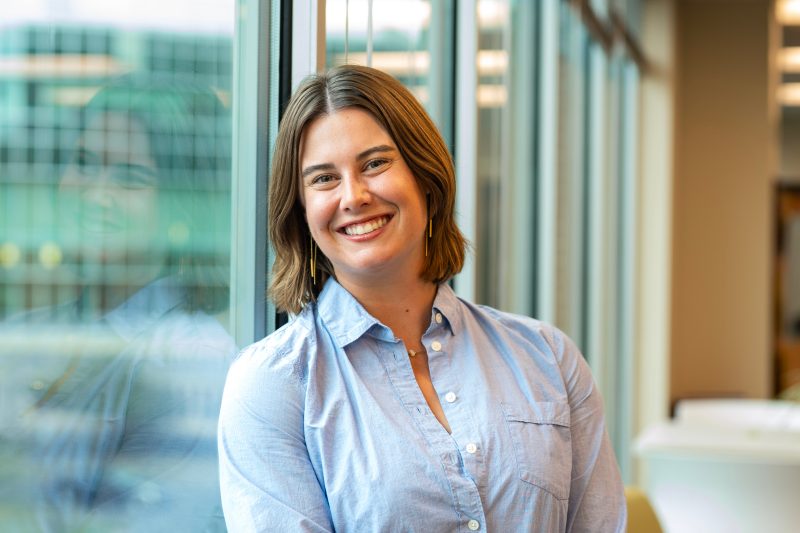
Meike van der Heijden, an assistant professor with the Fralin Biomedical Research Institute at VTC, has been named to the Dystonia Medical Research Foundation’s Medical and Scientific Advisory Council.
Council members are international leaders in dystonia care and research. They review research grants for funding and attend workshops to discuss the most pressing research directions.
“I'm deeply honored to be selected for the Dystonia Medical Research Foundation Medical and Scientific Advisory Council,” Van der Heijden said. “I am looking forward to serving the dystonia community in this capacity for the next four years.”
Van der Heijden is also an assistant professor in the School of Neuroscience of the Virginia Tech College of Science.
She is one of six new council members named by the dystonia foundation, which was established in 1976 to advance research, promote awareness, and support individuals and families affected by dystonia. The chronic brain disorder causes involuntary muscle contractions that make it difficult to control movement. It can affect any region of the body.
An estimated 250,000 people in the United States have dystonia, making it the third most common movement disorder behind essential tremor and Parkinson’s disease. Dystonia can occur in people of all ages.
Van der Heijden earned a bachelor’s degree in psychobiology from the University of Amsterdam and a doctorate in neuroscience from the Baylor College of Medicine, where she was also a postdoctoral fellow in the Department of Pathology and Immunology.
In her lab at the Fralin Biomedical Research Institute in Roanoke, Virginia, Van der Heijden studies the development of cerebellar function in health and disease. Abnormal cerebellar development can cause childhood dystonia as well as other neurodevelopmental disorders, such as autism spectrum disorder.